The right first mechanical watch is the one that fits your wrist, suits your week and can be serviced where you live. The brand comes after those three.
Start with the occasion
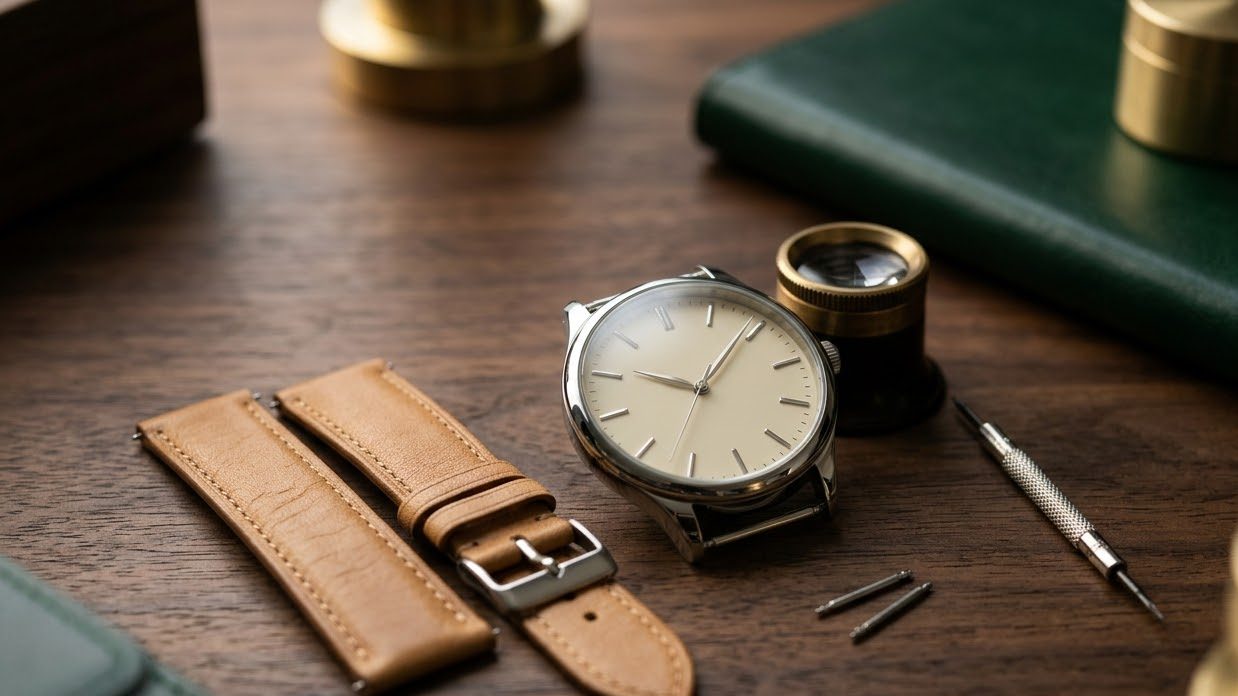
Decide what the watch is for before you look at a single dial. A slim, simple dress watch sits under a cuff and suits boardrooms. A sturdier field or sports watch handles travel, weekends and the odd splash. If you can own only one, choose the plain, versatile option: a clean dial, a steel case, a leather or metal strap you can change.
Know your movement
The movement is the engine inside the case.
- Manual-wind: you turn the crown each day. Thin and traditional, with a ritual some owners love.
- Automatic: winds itself from the motion of your wrist. The practical choice for daily wear.
- Quartz: battery-powered and more accurate than any mechanical watch. A perfectly good choice, but it is a different pleasure.
A mechanical watch will gain or lose a few seconds a day. That is normal and not a fault.
Case, glass and size
Stainless steel is the sensible default. Sapphire crystal resists scratches far better than mineral glass, and it is worth asking about. For size, the diameter matters less than the lug-to-lug length, which is how far the watch stretches across your wrist. Try it on: the lugs should not overhang the edge of your wrist.
Read the water-resistance number carefully
The figure in metres is a pressure test in a laboratory, not a depth you should dive to. As a rule of thumb, 30 to 50 metres means splashes, and 100 metres suits swimming. Never press or turn the crown underwater unless it is a screw-down crown.
The cost of owning it
Mechanical watches need servicing, commonly every five to ten years depending on the maker. Before you buy, ask three things: what a service costs, who does it, and how long it takes. A watch you cannot service locally is a problem waiting to happen.
Buy it properly
Buy from an authorised dealer, keep the invoice, and register the warranty. Grey-market imports are often cheaper, but many makers will not honour their warranty on them. If you buy pre-owned, insist on documentation and, ideally, an independent check of the watch before you pay.
Three questions before you pay
- Would I wear this on an ordinary Tuesday?
- Do I know what servicing costs and where it is done?
- Would I still like it if nobody recognised the name on the dial?
A watch that fits your wrist and your week will be worn. That is the whole point.