Good leather goods improve with age, while poor ones peel, crack and fade within a couple of years. You can tell them apart in a few minutes in a shop, if you know what to look for.
Learn the grades
- Full-grain leather: the strongest part of the hide, with natural markings left in place. It ages the best.
- Top-grain leather: the surface is lightly sanded for a more even look. Still good, a little less durable.
- "Genuine leather": despite the name, usually a lower grade. It is real leather but often not the best quality.
- Bonded leather: scraps of leather pressed together with a coating. Avoid it for anything you plan to keep.
If a seller will not say which grade it is, assume the lowest.
Two ways leather is tanned
Vegetable-tanned leather is firm, develops a rich patina and is less water-resistant. Chrome-tanned leather is softer, more colourful and handles moisture better. Neither is better in every case. Choose by how you will use the piece.
Check the construction
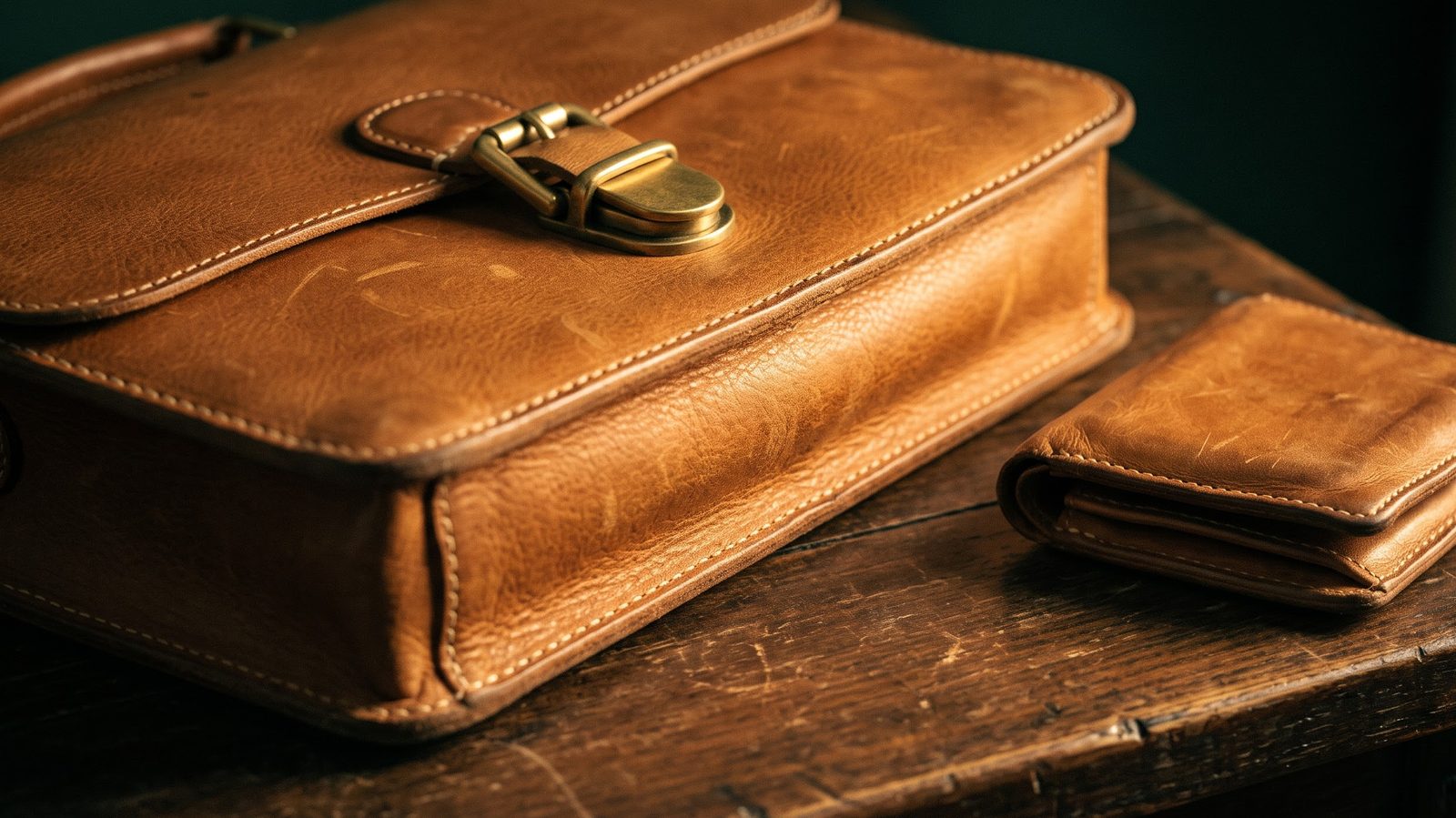
- Stitching: even, tight and without loose threads. Stress points such as handles should be reinforced.
- Edges: smooth and sealed, not thick with paint that will crack.
- Hardware: zips, buckles and clasps should feel heavy and move smoothly. Light, rattling metal fails first.
- Lining: a firm, well-attached lining is a sign of care inside as well as out.
- Smell: a strong chemical or plastic smell suggests a heavy coating over lower-grade material.
Choosing the shape
For a briefcase, measure your laptop and the papers you carry. A structured bag looks formal but is heavier. A softer, unlined bag is lighter and relaxes with use. For a wallet, slimmer is almost always better, since a thick wallet loosens its shape and strains your pocket.
Caring for leather in Indian conditions
Humidity during the monsoon encourages mould. Store leather in a breathable cotton dust bag, not a plastic cover, and add silica gel to the cupboard. Wipe off dust with a soft dry cloth, and condition the leather lightly once or twice a year. Never leave it in direct sun or in a hot car. If it gets wet, dry it slowly at room temperature, not near a heater.
Repair is a good sign
A maker that offers repairs, re-stitching or replacement parts expects its products to last. Ask about repair before you buy. A bag you can repair is worth more than one you can only replace.